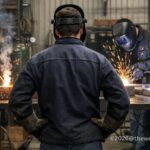
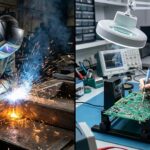
Welding is a fabrication process used to join two or more metal or thermoplastic parts permanently by applying heat, pressure, or both. During welding, the materials melt and fuse together, creating a strong and durable joint after cooling. In some welding methods, filler material is added to improve joint strength and bonding.
Welding plays a critical role in industries such as construction, automobile manufacturing, aerospace, shipbuilding, pipelines, and heavy machinery. From bridges and buildings to vehicles and household products, welding is one of the most essential manufacturing techniques used worldwide.
In simple terms, welding allows separate metal components to become a single strong structure. Without welding, modern engineering, industrial manufacturing, and infrastructure development would be extremely difficult. Understanding welding is important because it forms the backbone of countless mechanical and structural applications.
History of Welding
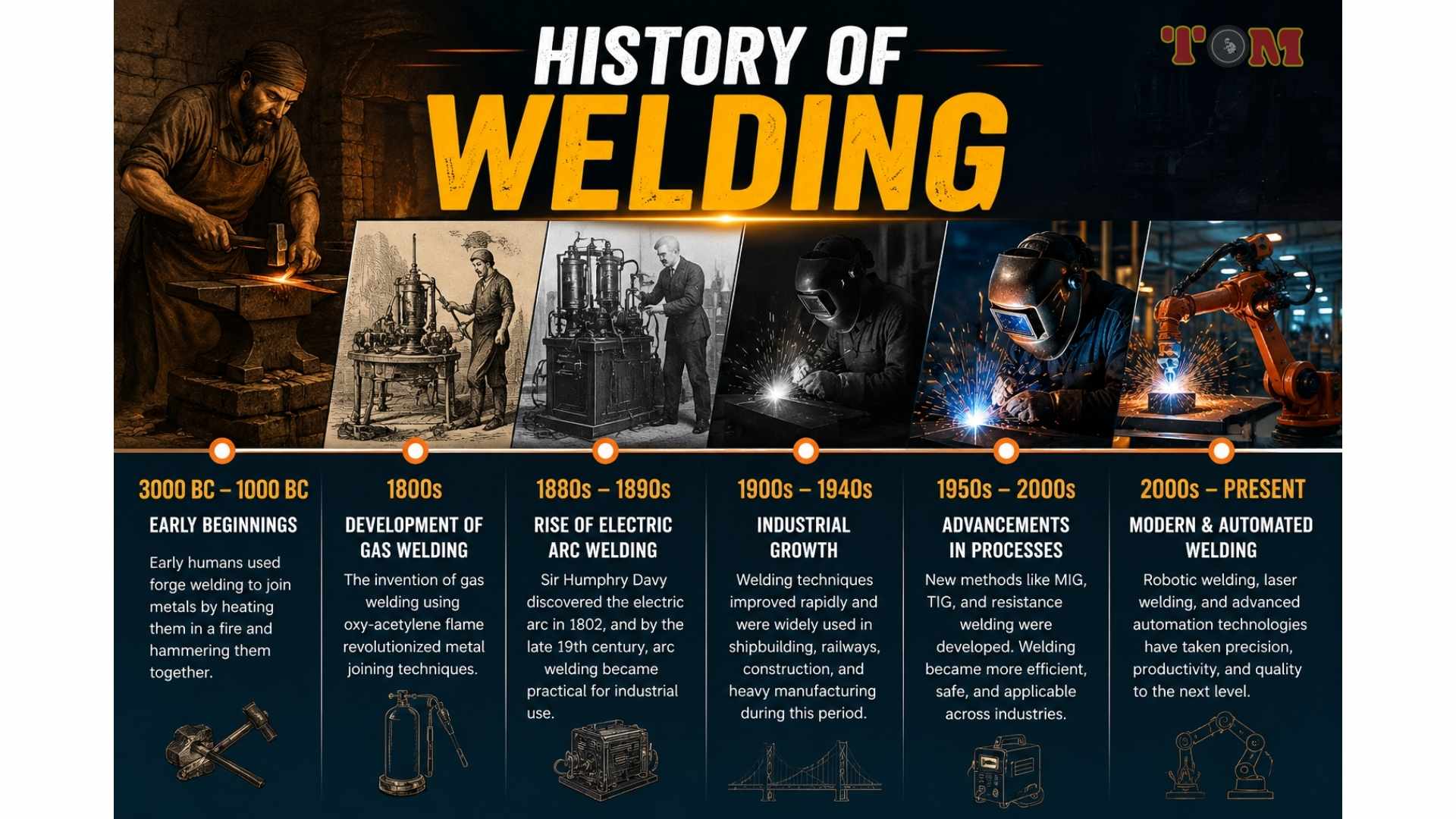
The concept of welding dates back thousands of years when blacksmiths used forge welding to join iron and steel components. Earlier welding methods relied on heating metals in furnaces and hammering them together.
Modern welding technology developed during the 19th and 20th centuries with the introduction of electric arc welding, gas welding, and resistance welding. Today, advanced technologies such as laser welding and robotic welding are widely used in automated industries.
Principle of Welding
The basic principle of welding is simple: heat is generated to melt the base material at the joining point. When the molten material cools and solidifies, it forms a permanent bond.
In some welding methods:
Heat alone is used
Pressure alone is applied
Both heat and pressure are combined
A filler material may also be added to strengthen the welded joint.
The effectiveness of welding depends on:
Temperature control
Material compatibility
Welding technique
Joint preparation
Cooling rate
How Does Welding Work?
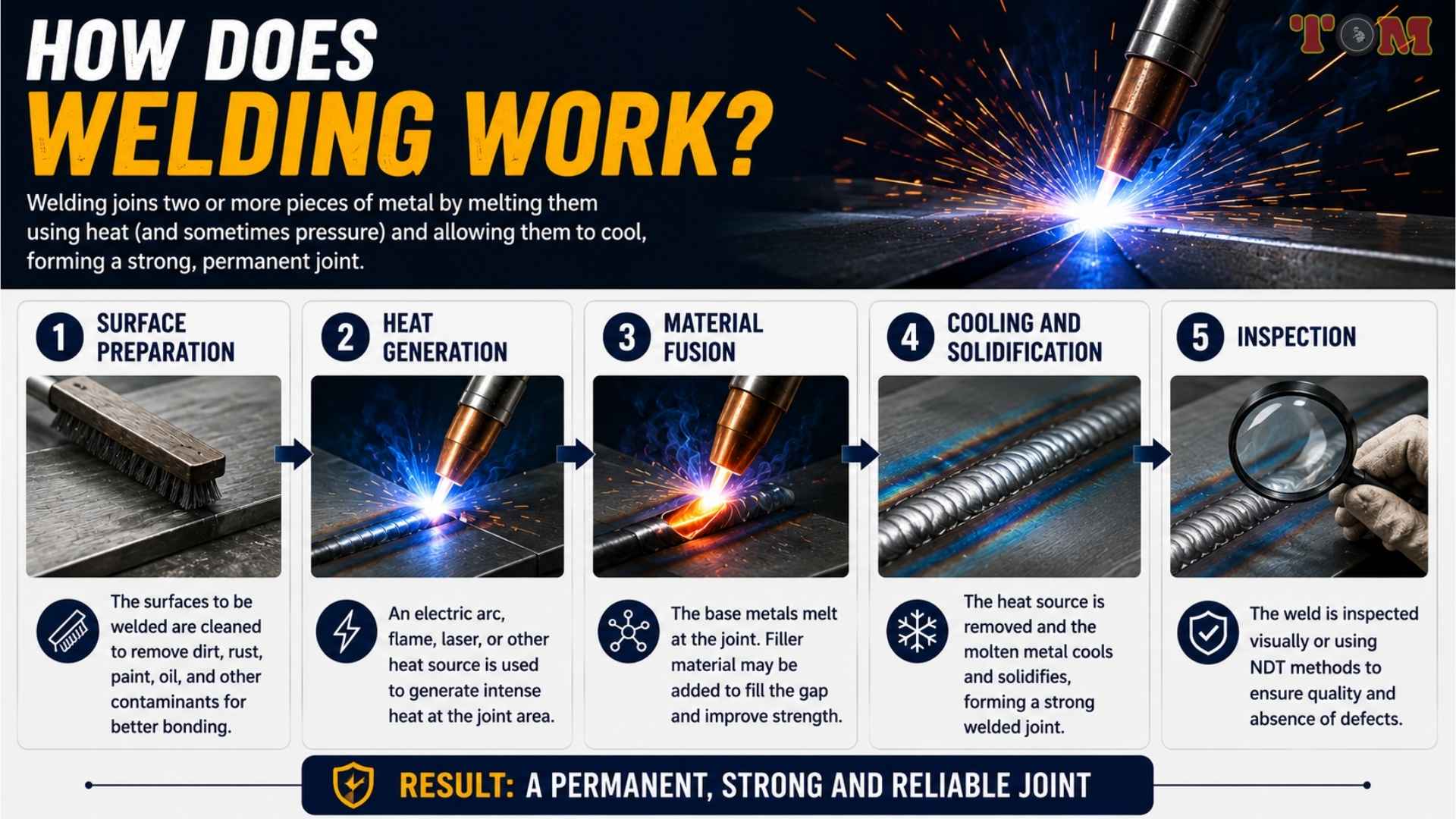
The welding process generally follows these steps:
1. Surface Preparation
Before welding begins, dirt, rust, paint, and grease are removed from the material surface to ensure strong bonding.
2. Heat Generation
Heat is generated using electricity, gas flames, friction, lasers, or ultrasonic energy depending on the welding method.
3. Material Fusion
The base metals melt at the joint area and mix together. In some cases, filler material is added.
4. Cooling and Solidification
After heating stops, the molten metal cools and forms a solid welded joint.
5. Inspection
The weld is inspected to ensure there are no defects like cracks, porosity, or weak bonding.
Main Components Used in Welding
Different welding setups may include several components:
Welding Power Source
Provides electrical energy required for arc welding.
Electrode
Conducts electric current and may also act as filler material.
Filler Material
Used to fill gaps and strengthen joints.
Shielding Gas
Protects molten metal from atmospheric contamination.
Welding Torch
Delivers heat and controls the welding process.
Safety Equipment
Includes welding helmet, gloves, goggles, jackets, and face shields.
Types of Welding
There are several welding methods used depending on the material and application.
1. Arc Welding
Arc welding is a widely used welding process that uses an electric arc to generate intense heat for melting and joining metals. It is popular in industries because it creates strong welds and works with different types of metals and thicknesses.
Common Types of Arc Welding
Shielded Metal Arc Welding (SMAW)
Also known as stick welding, SMAW Welding uses a consumable electrode covered with flux to create the weld. It is commonly used in construction, maintenance, and repair work because of its simplicity and low cost.
Gas Metal Arc Welding (GMAW/MIG)
MIG welding uses a continuously fed wire electrode along with shielding gas to protect the weld from contamination. It is fast, efficient, and commonly used in automotive and manufacturing industries.
Gas Tungsten Arc Welding (GTAW/TIG)
TIG welding uses a non-consumable tungsten electrode to produce clean and highly precise welds. It is ideal for thin materials and applications requiring high-quality finishes.
Flux-Cored Arc Welding (FCAW)
FCAW is similar to MIG welding but uses a flux-filled wire electrode. It is suitable for heavy-duty industrial work and performs well in outdoor environments.
Applications of Arc Welding
Structural fabrication of buildings and steel frameworks
Pipeline welding in oil and gas industries
Automotive manufacturing and vehicle body assembly
Repair and maintenance of machinery and equipment
Shipbuilding and marine structure fabrication
Railway track and locomotive component manufacturing
Heavy equipment and industrial machinery production
Aerospace component fabrication in specialized applications
2. Gas Welding
Gas welding is a welding process that uses a flame produced by burning fuel gas with oxygen to melt and join metals. The most commonly used method is oxy-acetylene welding, which is widely preferred for repair and light fabrication work.
Applications of Gas Welding
Pipe welding and plumbing work
Maintenance and repair of metal equipment
Sheet metal repair in automotive workshops
Metal fabrication for small industrial projects
Repair of agricultural tools and machinery
Welding of thin metal sections
Bicycle and furniture frame repair
Workshop and garage repair applications
3. Resistance Welding
Resistance welding is a process in which heat is generated by electrical resistance between metal surfaces to join them together. It is a fast and efficient welding method commonly used in mass production industries.
Types of Resistance Welding
Spot Welding
Spot welding joins metal sheets at specific points using heat and pressure. It is widely used for joining thin metal sheets in manufacturing.
Seam Welding
Seam welding creates a continuous welded joint by using rotating wheel electrodes. It is commonly used where leak-proof joints are required.
Projection Welding
Projection welding uses raised sections or projections on the workpiece to concentrate heat and pressure for welding. It is suitable for joining nuts, bolts, and metal fasteners.
Applications of Resistance Welding
Automobile body manufacturing
Electronics and electrical industries
Metal sheet fabrication
Battery and appliance manufacturing
Aerospace component assembly
Production of leak-proof containers
4. Laser Welding
Laser welding is an advanced welding process that uses a highly focused laser beam to melt and join materials with exceptional accuracy. It is preferred for applications requiring precision and minimal heat damage.
Advantages of Laser Welding
High precision and accuracy
Minimal material distortion
Fast welding operation
Suitable for complex shapes
Produces clean and strong joints
Applications of Laser Welding
Aerospace industry components
Electronics and micro-devices
Medical equipment and instruments
Automotive manufacturing
Jewelry and precision metalwork
5. Friction Welding
Friction welding is a solid-state welding process in which heat is generated through friction between two surfaces before joining them under pressure. This method produces strong joints without melting the materials completely.
Applications of Friction Welding
Automotive shafts and axles
Aerospace components
Railway equipment manufacturing
Heavy machinery parts
Tool and drill manufacturing
Metal rod and pipe joining
6. Ultrasonic Welding
Ultrasonic welding uses high-frequency sound vibrations to join plastics and thin metal components without excessive heat. It is widely used for delicate and precision joining applications.
Applications of Ultrasonic Welding
Electronics and circuit assembly
Plastic manufacturing industry
Medical device production
Automotive interior components
Packaging and sealing applications
Wire and cable connections
Types of Welding Joints
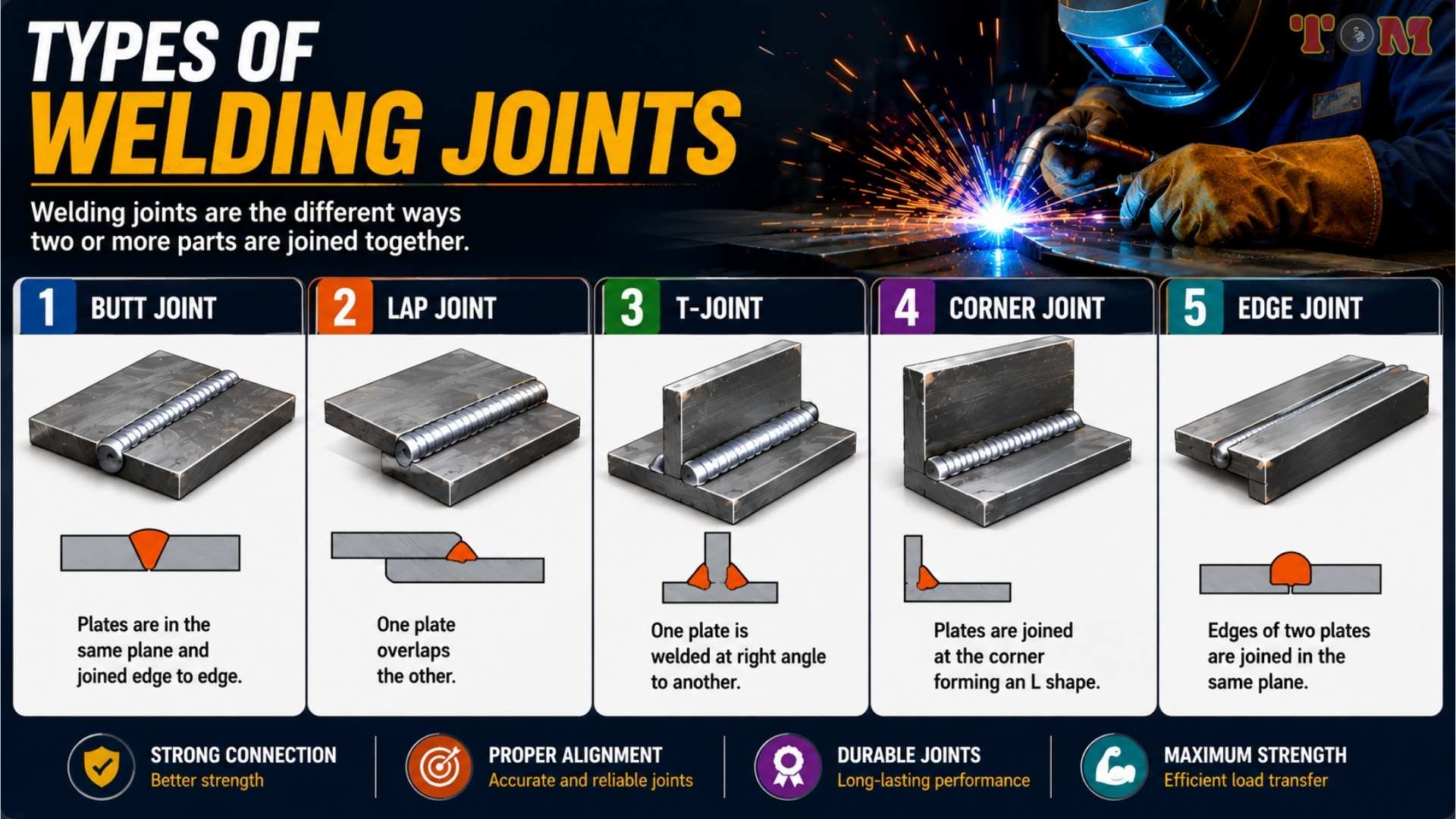
Welding joints determine how materials are connected.
Butt Joint: Two pieces are joined edge to edge.
Lap Joint: One material overlaps another.
Corner Joint: Materials are joined at right angles.
Tee Joint: Forms a T-shaped connection.
Edge Joint: Edges of materials are placed side by side.
Shipbuilding: Used for joining large steel sections.
Oil and Gas Industry: Pipelines and storage tanks depend heavily on welding.
Railway Industry: Tracks and train components are welded for durability.
Manufacturing Industry: Machines and industrial equipment require welded joints.
Common Defects in Welding
Improper welding may cause defects such as:
Cracks: Can weaken the welded structure.
Porosity: Tiny holes formed due to trapped gases.
Slag Inclusion: Occurs when impurities remain trapped.
Undercut: Grooves formed at the weld edge.
Incomplete Penetration: Poor fusion inside the joint.
Proper training and inspection help minimize these issues.
Safety Precautions in Welding
Safety is essential during welding.
Wear protective clothing
Use welding helmets and gloves
Ensure proper ventilation
Avoid direct exposure to arc light
Keep flammable materials away
Inspect equipment regularly
Following proper safety measures reduces accidents and injuries.
Difference Between Welding and Brazing
Welding
Brazing
Base metal melts
Base metal does not melt
Stronger joint
Comparatively weaker joint
Higher temperature
Lower temperature
Permanent joining
Less rigid joining
Conclusion
Welding is one of the most important manufacturing and fabrication processes used to permanently join materials, especially metals. From automobiles and bridges to pipelines and aerospace components, welding makes modern engineering possible. Different welding methods are available depending on the material, strength requirement, and application. Understanding welding principles, types, joints, and safety precautions helps in choosing the right process for any industrial need. As industries continue advancing with automation and precision manufacturing, welding remains a critical technology driving innovation and structural reliability across the world.