In manufacturing, fabrication, and repair work, joining metal parts is a fundamental process. Two commonly used techniques for this purpose are welding and soldering. Although both methods join metal components, they operate on different principles, temperatures, and applications.
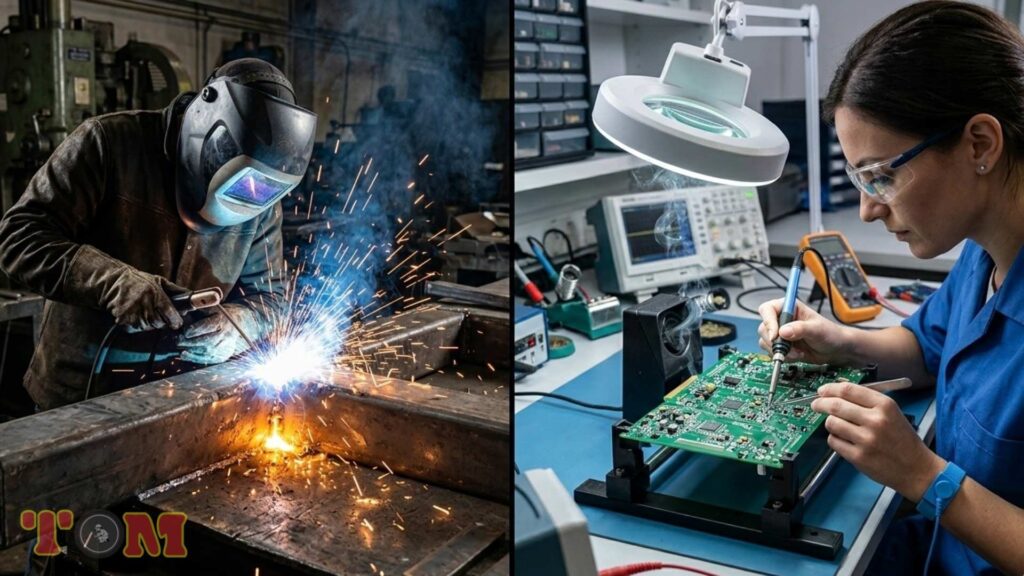
Welding permanently joins metals by melting the base materials and often adding a filler metal to create a strong bond. Soldering, on the other hand, joins metals by melting a low-temperature filler metal (called solder) without melting the base metals themselves.
Understanding the difference between welding and soldering is important in industries such as construction, automotive manufacturing, plumbing, and electronics. Each method has its own advantages, limitations, equipment requirements, and ideal applications depending on the strength, temperature, and precision needed.
What is Welding?
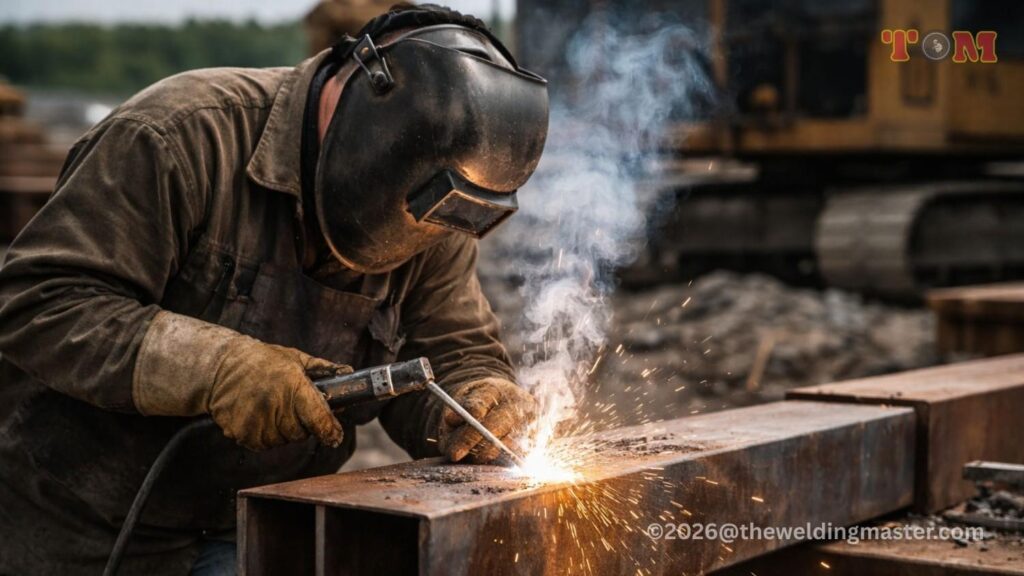
Welding is a metal joining process in which two or more metal parts are fused together by melting their edges. A filler metal is often added to strengthen the joint.
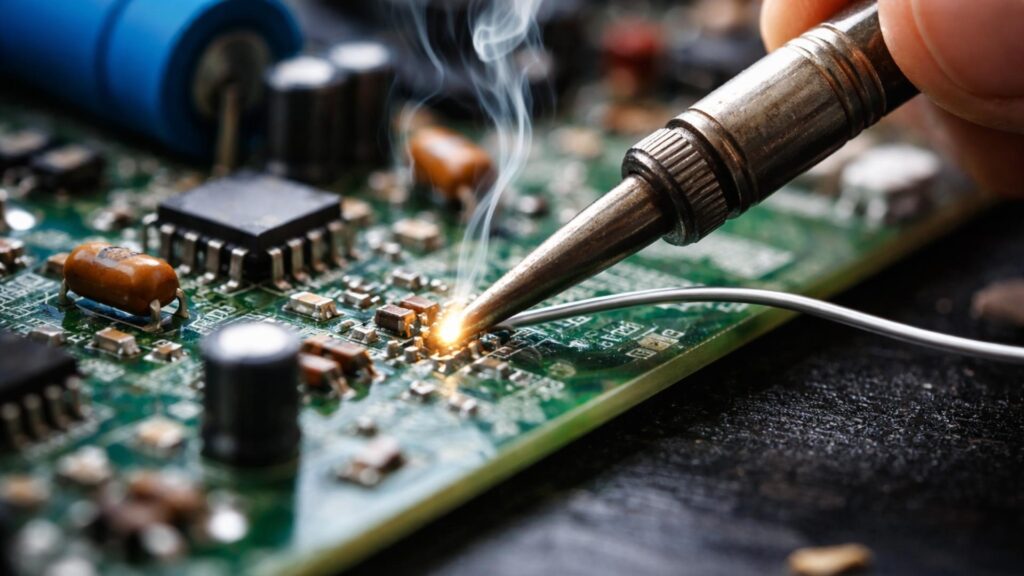
Soldering is a metal joining process where a low-melting filler metal called solder is melted to join two metal surfaces without melting the base metals.
The solder flows into the joint and solidifies to form the bond.
Key Characteristics of Soldering
Base metals do not melt
Uses low temperature
Uses solder (usually tin-based alloy)
Produces moderately strong joints
Ideal for delicate components
Common Types of Soldering
Soft Soldering
Hard Soldering
Silver Soldering
Applications of Soldering
Electronics and circuit boards
Electrical connections
Jewelry making
Plumbing for copper pipes
Small mechanical components
Advantages of Soldering
Low temperature process
Minimal distortion
Simple equipment
Suitable for delicate parts
Disadvantages of Soldering
Weaker joints than welding
Not suitable for heavy loads
Limited temperature resistance
Difference Between Welding and Soldering
Feature
Welding
Soldering
Basic Principle
Melts base metals to join them
Melts only filler metal
Temperature
Very high temperature
Low temperature
Joint Strength
Very strong
Moderate strength
Base Metal
Melted
Not melted
Filler Metal
Often used
Always used
Applications
Structural and heavy-duty work
Electronics and light-duty work
Equipment
Complex and expensive
Simple and inexpensive
Skill Level
Requires trained welder
Easier to perform
When to Use Welding vs Soldering
Use Welding When:
High strength joint is required
Metals are thick
Structural integrity is important
Permanent joining is needed
Use Soldering When:
Components are delicate
Electrical connections are required
Low heat is necessary
Parts are small or thin
Conclusion
Welding and soldering are both important metal-joining processes, but they serve very different purposes. Welding creates extremely strong joints by melting and fusing the base metals, making it ideal for structural applications such as construction, pipelines, and heavy machinery. Soldering, in contrast, uses a low-melting filler metal to join parts without melting the base materials, which makes it perfect for electronics, electrical connections, and delicate components.
Choosing between welding and soldering depends on factors such as required joint strength, material thickness, operating temperature, and application type. Understanding these differences helps engineers and technicians select the most appropriate joining method for efficient and reliable results.
1. What is the main difference between welding and soldering?
Welding melts the base metals to form a joint, while soldering melts only a filler metal called solder without melting the base metals.
2. Which joint is stronger: welding or soldering?
Welded joints are significantly stronger because the base metals fuse together.
3. Is soldering used for structural applications?
No, soldering is mainly used for electronics and small components, not structural parts.
4. What temperature is used in soldering?
Soldering typically occurs below 450°C, depending on the type of solder.
5. Do both processes require filler metal?
Welding may or may not use filler metal, while soldering always uses solder.
6. Can welding be used on thin materials?
Yes, but it may cause distortion if not controlled properly.
7. Is soldering easier than welding?
Yes, soldering is simpler and requires less skill and equipment.
8. What metals are commonly soldered?
Copper, brass, silver, and electronic component leads are commonly soldered.
9. Can soldered joints handle high temperatures?
No, soldered joints have lower heat resistance compared to welded joints.
10. Is soldering used in electronics?
Yes, soldering is the primary method used to connect electronic components on circuit boards.