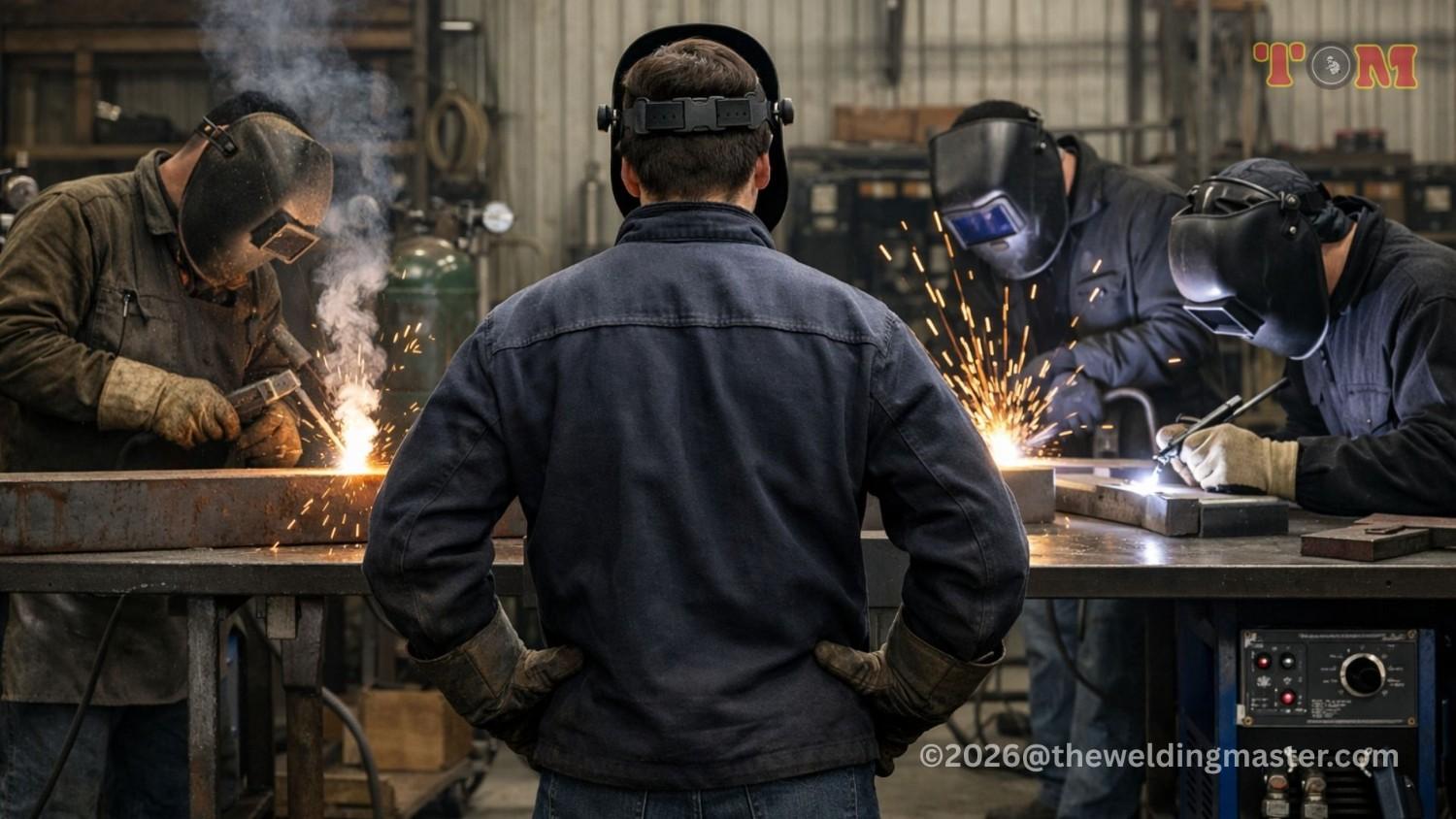
If you are new to welding, choosing between Stick, MIG, and TIG welding can feel overwhelming. Every beginner hears different advice. Some say Stick welding makes you a “real welder,” others recommend MIG as the easiest way to start, while TIG is often praised as the most advanced and professional option.
So the real question is simple:
Which welding process should you learn first?
As a welding instructor with more than 15 years of hands-on experience, this guide gives you the honest, practical answer based on safety, learning curve, real-world usability, and long-term career value. This article is written for beginner welders, DIY hobbyists, trade students, and career-focused learners who want clarity instead of confusion.
By the end, you will know exactly which welding method is best for you to start with and why.
Which Welding Should a Beginner Learn First?
For most beginners, MIG welding is the best welding process to learn first. It has the easiest learning curve, produces clean welds, requires less coordination, and works perfectly for home projects and entry-level welding jobs. Stick welding is better suited for outdoor and construction work, while TIG welding is best learned later due to its higher difficulty and precision requirements.
Understanding the Three Main Welding Types
Before comparing them, it helps to understand what each welding process actually involves.
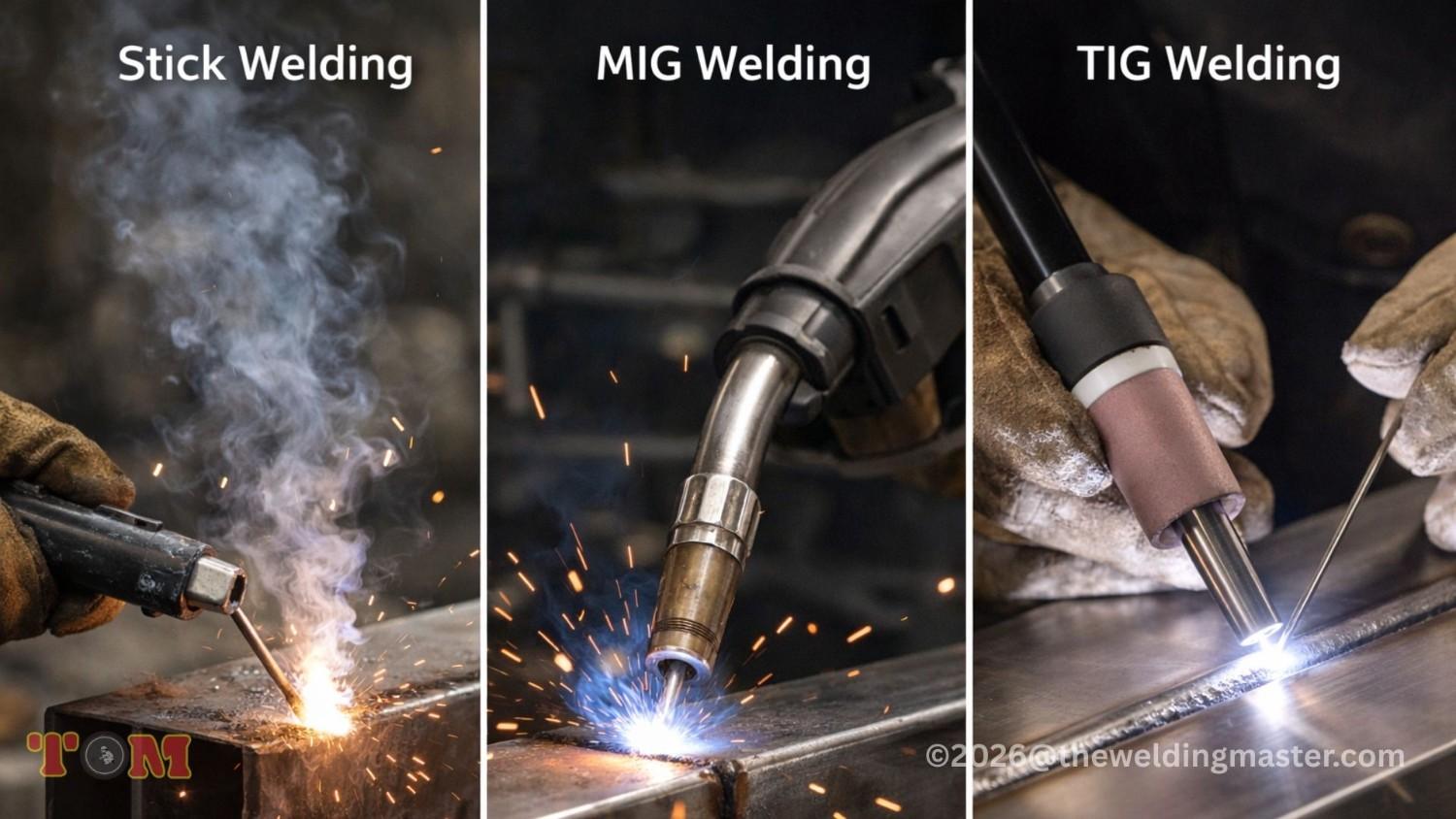
Stick Welding (SMAW): Uses a consumable electrode coated in flux to create the weld and shielding.
MIG Welding (GMAW): Uses a continuously fed wire and shielding gas for clean, consistent welds.
TIG Welding (GTAW): Uses a tungsten electrode and a separate filler rod for high-precision welding.
All three are widely used in the welding industry, but they are not equally beginner-friendly.
Stick Welding Explained (SMAW)
How Stick Welding Works
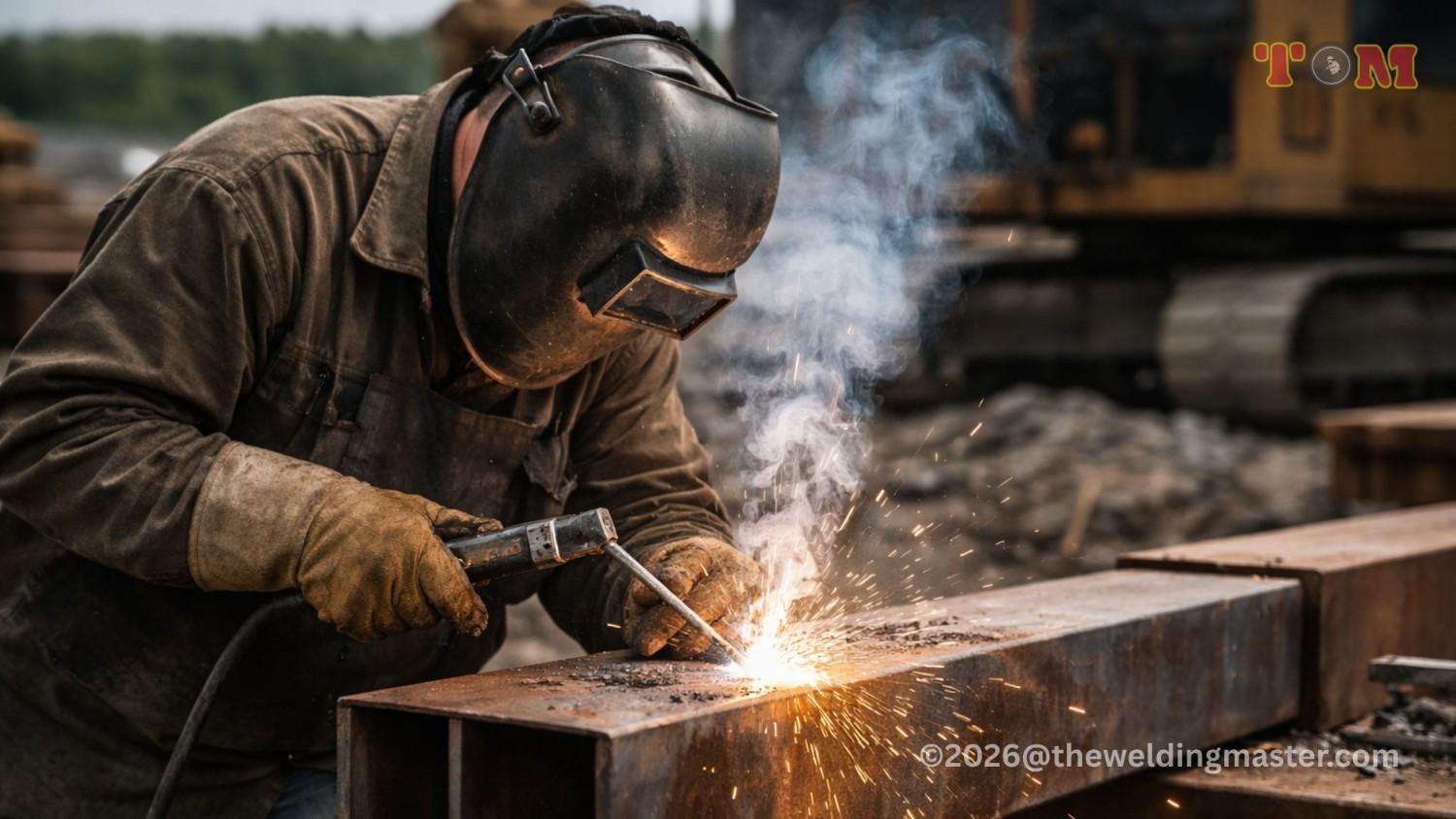
Stick welding uses a flux-coated electrode that melts to form the weld while producing a protective gas shield. The welder strikes an arc and manually controls the rod as it burns down.
This method is rugged, reliable, and still heavily used in industrial work.
Difficulty Level for Beginners
Stick welding has a moderate to high learning difficulty.
Stick welding builds strong fundamentals, but beginners often find it frustrating at first.
MIG Welding Explained (GMAW)
How MIG Welding Works
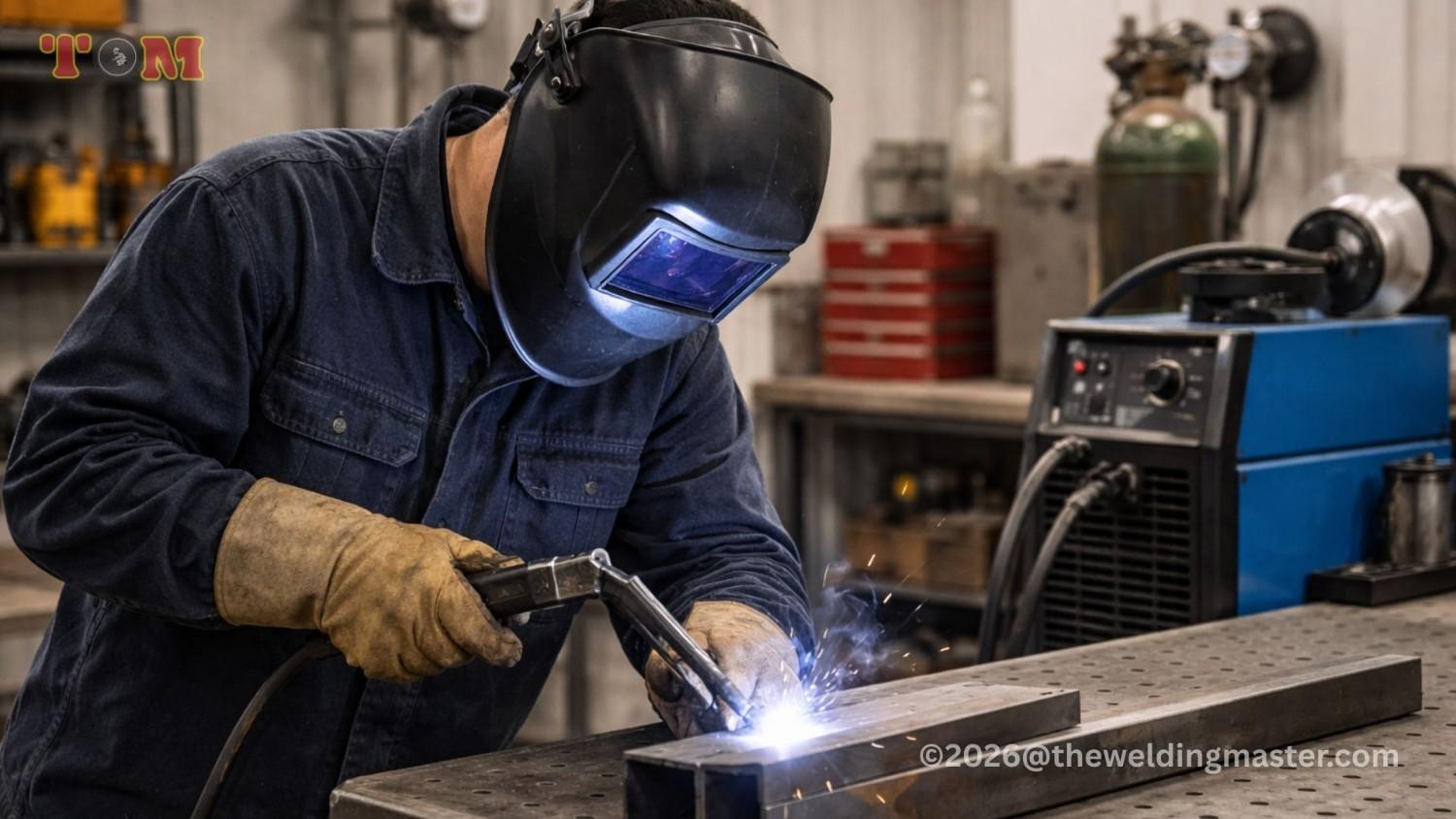
MIG welding uses a wire-fed gun that continuously feeds electrode wire while shielding gas protects the weld pool. You simply pull the trigger and guide the gun.
This simplicity is why MIG welding is widely considered the easiest welding process to learn.
Difficulty Level for Beginners
MIG welding has a low difficulty level and is extremely beginner-friendly.
It eliminates many challenges beginners face:
No rod changes
Easier arc control
Cleaner welds with less spatter
Many beginners produce acceptable welds on their very first day.
Equipment and Setup Requirements
MIG welding machine
Welding wire spool
Shielding gas cylinder
Standard welding safety gear
The upfront cost is higher than Stick welding, but the learning curve is much faster.
Best Real-World Applications
Home garage projects
Automotive repairs
Fabrication shops
Thin to medium steel welding
Common Beginner Mistakes
Incorrect voltage or wire speed settings
Poor joint preparation
Wrong gun angle
Welding outdoors in windy conditions
MIG welding is one of the fastest ways for beginners to build confidence.
TIG Welding Explained (GTAW)
How TIG Welding Works
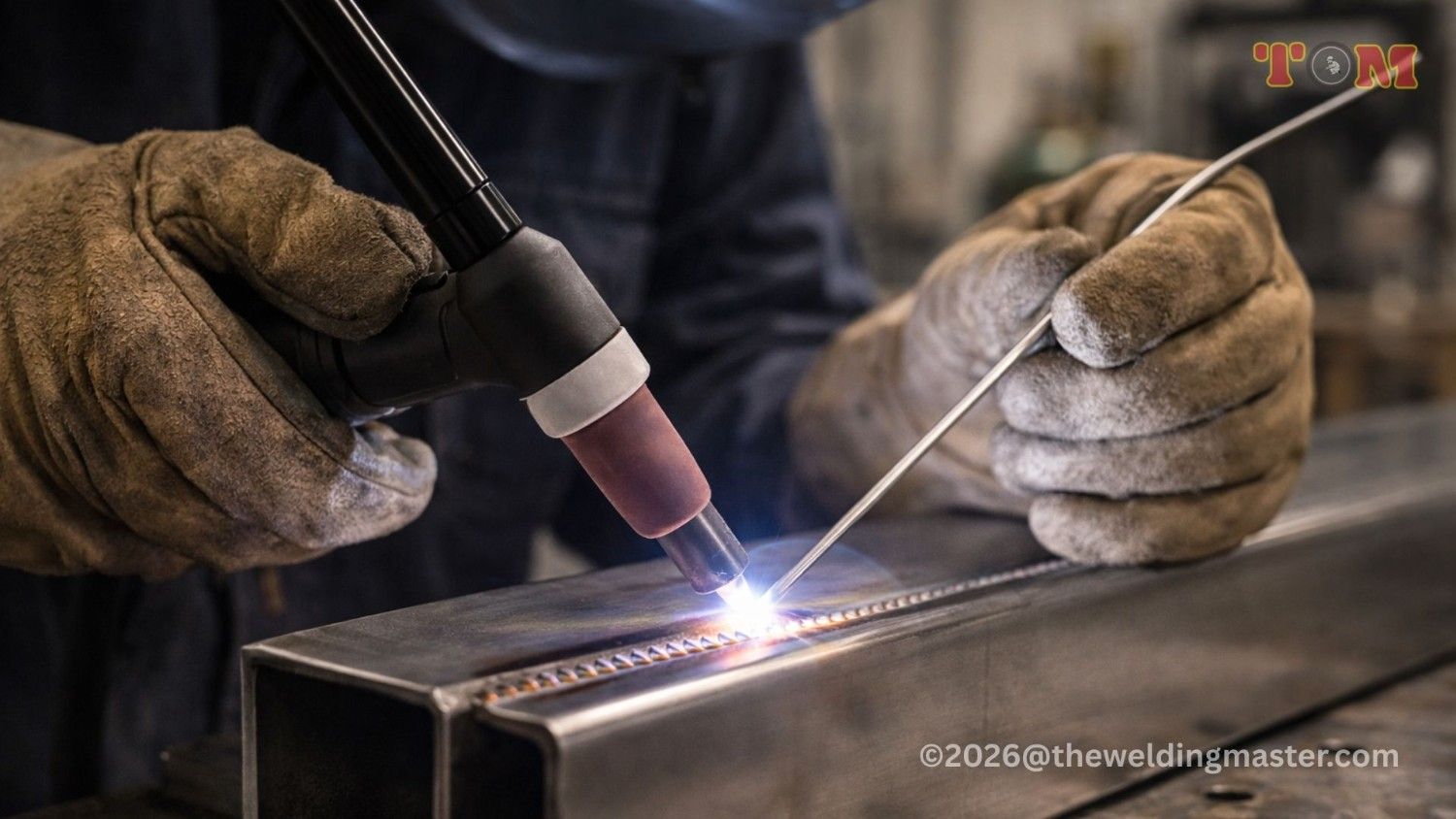
TIG welding uses a tungsten electrode to create the arc while the welder feeds filler rod by hand. Shielding gas protects the weld from contamination.
This process offers unmatched precision and control.
Difficulty Level for Beginners
TIG welding has a high learning difficulty.
It requires:
Two-hand coordination
Precise torch control
Careful heat management
Equipment and Setup Requirements
TIG welding machine
Tungsten electrodes
Filler rods
Argon shielding gas
Advanced safety gear
TIG welding has the highest setup cost and steepest learning curve.
Best Real-World Applications
Aerospace welding
Stainless steel fabrication
Aluminum welding
High-end custom projects
Common Beginner Mistakes
Contaminating the tungsten electrode
Poor filler rod control
Overheating the base metal
Inconsistent torch movement
TIG welding is extremely rewarding, but it is not beginner-friendly.
Stick vs MIG vs TIG Welding: Beginner Comparison
When comparing stick vs MIG vs TIG welding, beginners should focus on learning difficulty, equipment cost, speed of learning, and real-world usability.
Comparison Factor
Stick Welding
MIG Welding
TIG Welding
Learning Difficulty
Moderate
Easiest
Hardest
Cost of Equipment
Lowest upfront cost
Mid-range
Highest
Speed of Learning
Moderate
Fastest
Slow
Indoor vs Outdoor Use
Excellent outdoors
Best indoors
Indoor only
Career Relevance
Construction, pipelines
Manufacturing, fabrication
Aerospace, specialty welding
Pros and Cons of Each Welding Method
Stick Welding Pros and Cons
Pros
Works well outdoors
Low equipment cost
Strong, durable welds
Widely used in heavy industry
Cons
Steeper learning curve
Slag cleanup required
Less clean appearance
MIG Welding Pros and Cons
Pros
Best welding for beginners
Clean and consistent welds
Fast learning curve
High productivity
Cons
Not ideal for windy outdoor use
Requires shielding gas
Slightly higher upfront cost
TIG Welding Pros and Cons
Pros
Highest weld quality
Excellent precision
Works on many metals
Cons
Hardest welding process to learn
Slow welding speed
Expensive equipment
Which Welding Process Is Best Based on Beginner Goals?
Best welding for beginners: MIG welding
Best for outdoor and construction work: Stick welding
Best for precision and advanced careers: TIG welding
DIY and Home Garage Beginners
MIG welding is ideal because it is easy to learn, produces clean welds, and works well for common home projects.
Career-Focused Welders
Start with MIG welding to build fundamentals, then move to Stick welding for structural work, and TIG welding for precision and higher-paying specialties.
Outdoor and Construction Work
If your goal is job-site welding or outdoor repairs, Stick welding may be the better first choice, even though it takes longer to master.
MIG welders are in constant demand in manufacturing and fabrication
Stick welding is essential in construction and pipeline work
TIG welders earn premium pay in aerospace and specialty fields
Skill Transferability
Learning MIG welding first helps beginners understand puddle control, heat management, and joint preparation. These skills transfer easily to Stick and TIG welding later.
Conclusion
If you are just starting out, begin with MIG welding to build confidence and strong fundamentals. Add Stick welding for outdoor and structural work, then learn TIG welding for precision and higher-paying specialties.
Welding rewards patience, practice, and smart learning choices. Start simple, stay safe, and build your skills step by step.
FAQs: Frequently Asked Questions
Which welding is best for beginners?
MIG welding is the best option for beginners because it is easy to learn and produces clean, consistent welds.
Is Stick welding harder than MIG?
Yes, Stick welding has a steeper learning curve due to arc control and slag management.
Is TIG welding worth learning?
Yes, TIG welding is extremely valuable, but it is best learned after MIG or Stick welding.
Can I learn welding at home?
Yes, with proper safety equipment, training, and consistent practice.
How long does it take to become a welder?
Basic welding skills can be learned in a few months, while professional mastery takes years.
Should I buy a welder before learning?
Yes, starting with a beginner-friendly MIG welder is strongly recommen